
The night we changed our name
Eight days to Jubilee. At midnight on 26 May 1966, the Union Jack came down and a country called itself something new.
By Guest writer
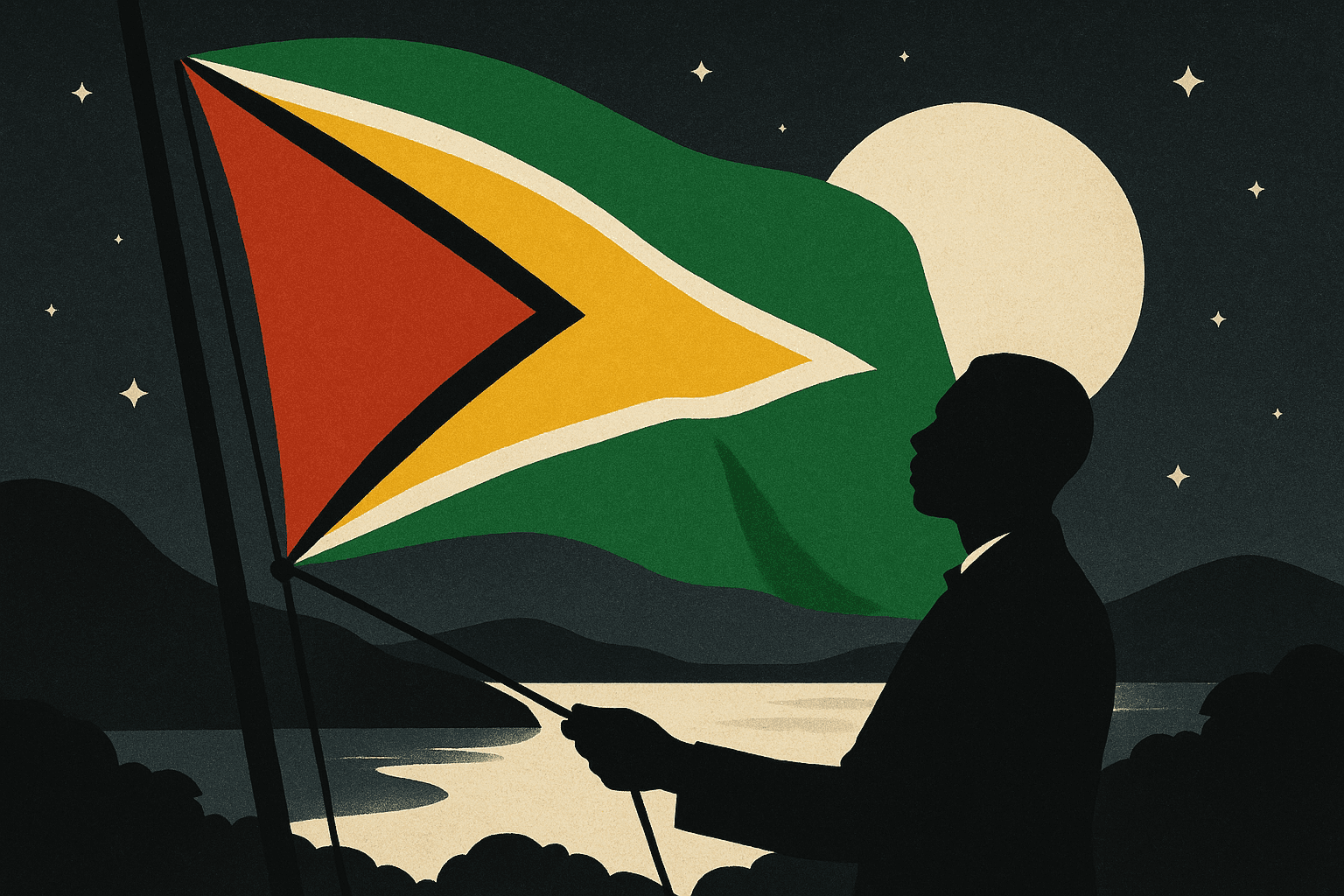
The flagpole stood at the National Park in Georgetown. Midnight, 25–26 May 1966. The Duke of Kent was there, representing the Crown. Forbes Burnham stood ready to speak. The Union Jack came down. The Golden Arrowhead went up. British Guiana became Guyana.
The name itself — Guyana — came from the Amerindian word meaning "land of many waters". Not new, then. Older than the colonial name it replaced. A return, not an invention.
Burnham's independence address that night spoke of sovereignty, of self-determination, of a new chapter. The crowd at the National Park sang the new anthem. The ceremony was formal, scripted, watched. What happened at midnight was clear: the administrative change, the flag, the name on the map.
What took longer to settle was what independence meant in practice. Guyana was independent, yes, but still a Commonwealth realm with the British monarch as head of state. That would not change until 1970, when Guyana became a republic. The night of 26 May 1966 was the first shift, not the final one.
Some things changed immediately. Passports. Letterheads. The name you wrote when someone asked where you were from. Other things — the structures of power, the economic ties, the question of who controlled what — those took years, and in some cases are still being worked out.
The ceremony at the National Park was not the whole story. It was the moment the story became visible. A flag goes up, a name changes, and a country begins the long work of deciding what that name will mean.
Eight days from now, Guyana turns sixty. The flagpole is still there. The name is still ours. The work is still being done.
Get the next drop in your inbox.
Three drops a week. Wednesdays, Saturdays, Sundays. Edited by Denise.
One email per drop. Unsubscribe any time. We never share your address.