
The Republic We Tried to Build
Seven days to Jubilee. On 23 February 1970, Guyana became the world's first co-operative republic. The experiment didn't last, but the date still matters.
By Guest writer
On 23 February 1970, Guyana became the world's first co-operative republic. Not a monarchy. Not a standard republic. A co-operative one.
The word meant something specific then. Village co-ops were supposed to own their own bakeries, rice mills, transport. The state would nationalise the bauxite industry — take it back from Alcan, from Reynolds. Workers would have a stake. The economy would belong to Guyanese, not London, not New York.
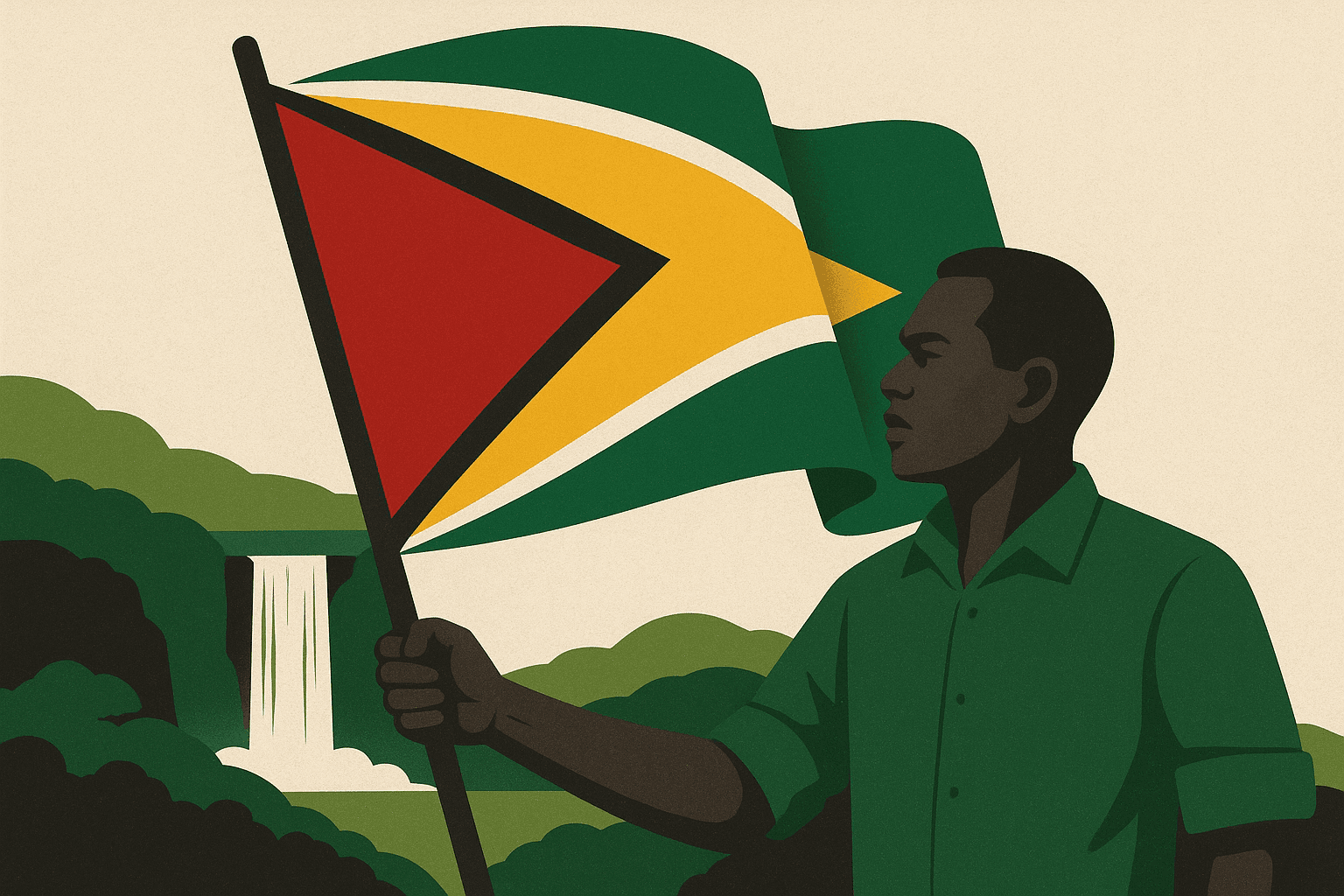
Forbes Burnham stood in the National Park and told the country it was starting again. The Crown was gone. Elizabeth II was no longer head of state. The new flag — golden arrowhead on green, red, black — flew alone.
Some of it worked. The bauxite mines at Linden were nationalised in 1971. Guyanese ran them. For a while, that mattered. Village co-ops did start — small ones, uneven ones. A bakery in Buxton. A sawmill in Linden. A transport service in Berbice. They didn't all survive, but they weren't decoration either.
Most of it didn't work. The state took on too much. The co-ops needed capital, training, distribution networks they never got. By the mid-seventies, the economy was struggling. By 1980, it was in trouble. The co-operative model became something else — centralised, politicised, running on shortages and ration books.
But 23 February stayed. It is still a national holiday. Mashramani — the festival that marks it — is still the loudest day on the Guyanese calendar. Costumes, floats, music from Linden to Georgetown. The date carries weight because it was the day Guyana said it would govern itself, fully, without a monarch across the ocean.
The co-operative republic didn't last as policy. The word "co-operative" faded from official use by the nineties. But "republic" stayed. It still means something — the idea that the country answers to itself, not to inherited crowns or foreign capital.
Seven days to Jubilee. The experiment we tried in 1970 didn't work the way it was sold. But the date it began on still marks the calendar, still stops traffic, still matters to people who remember what it felt like to try.
Get the next drop in your inbox.
Three drops a week. Wednesdays, Saturdays, Sundays. Edited by Denise.
One email per drop. Unsubscribe any time. We never share your address.