
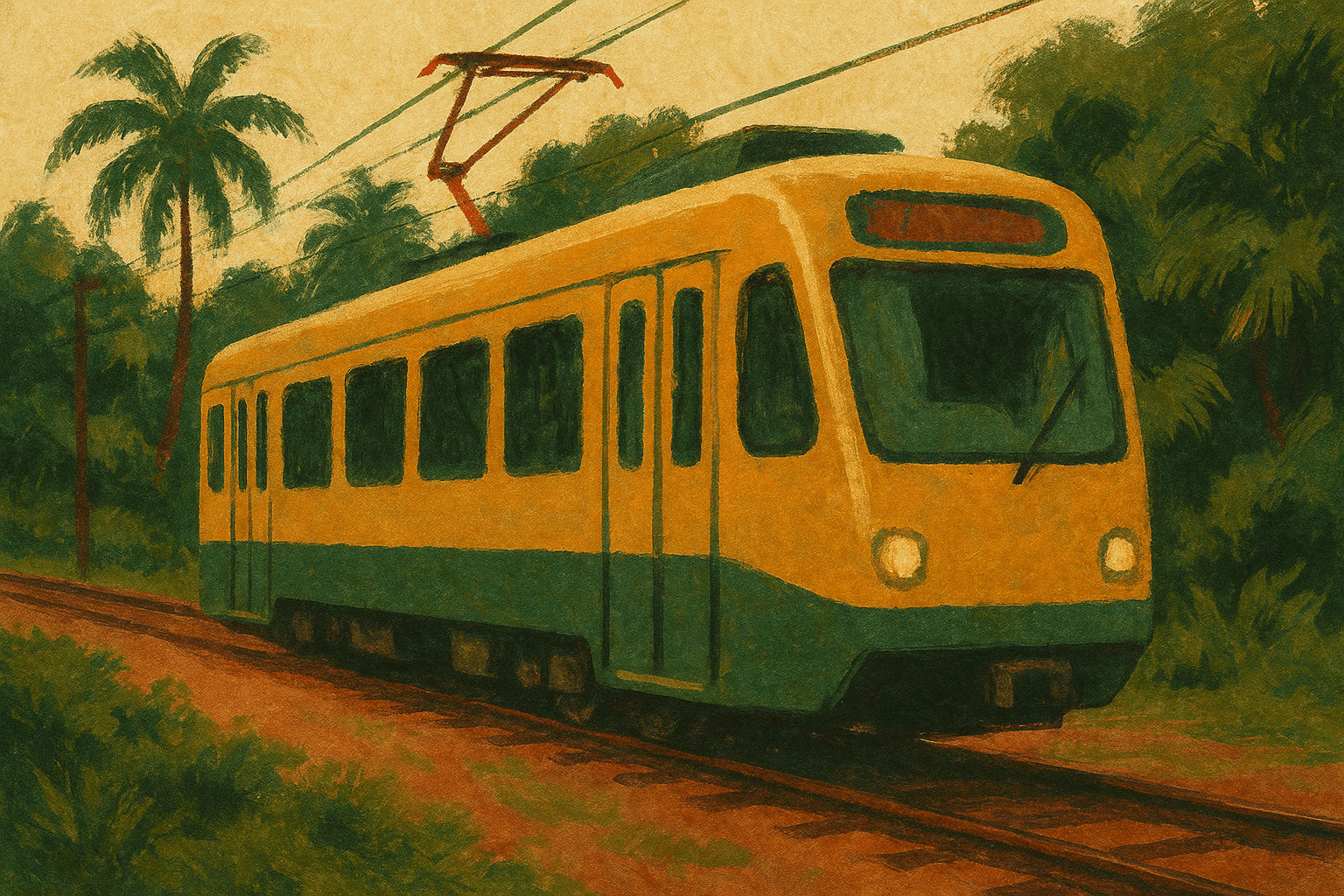
Light rail in Georgetown? Guyana's looking at it
President Ali says the government is actively exploring mass transit — including light rail and larger buses — to keep pace with the country's oil-driven expansion.
President Irfaan Ali announced this week that Guyana is examining options for a modern mass transit system. Light rail. Larger buses. Something to complement the road network that's expanding faster than anyone planned for five years ago.
The statement came during a public address on Wednesday. No timeline. No budget. But the signal itself matters — this is the first time a sitting president has named mass transit as part of the national infrastructure conversation.
Georgetown's roads are already straining. The minibus park at Stabroek is a tangle of metal and voices every morning. Commuters from Sophia, Diamond, Kitty — they all funnel into the same chokepoints. Oil money has brought jobs, but it hasn't yet brought a way to move people efficiently between them.
Light rail would be a first for the English-speaking Caribbean. Trinidad talked about it in the 2000s. Jamaica's been talking about it longer. Neither built it. Guyana might.
The question is whether the government can move past exploration and into execution. The country has proven it can build roads — the new four-lane highway from Ogle to Haags Bosch opened ahead of schedule. But rail is different. It requires coordination across agencies, land acquisition, and a willingness to disrupt the minibus economy that currently runs the city.
That last part is not small. The minibus system is informal, privately owned, and woven into the fabric of how Georgetown works. Any mass transit plan will have to reckon with it — either by integrating drivers into the new system or compensating them out of it.
Ali didn't address that on Wednesday. He focused on capacity. On keeping pace with growth. On making sure the infrastructure matches the ambition.
The announcement comes as ECLAC projects Guyana's economy will grow 16.3 percent this year, the fastest in the region. That growth is real, but it's also uneven. It shows up in new hotels and housing developments, but also in traffic that didn't exist three years ago.
Mass transit won't solve everything. But it would be a start. And if Guyana can build it — if it can move from talking to laying track — it would mark a shift from a country reacting to oil wealth to one planning for it.
For now, it's still exploration. But exploration is further than we've been before.
Get the next drop in your inbox.
Three drops a week. Wednesdays, Saturdays, Sundays. Edited by Denise.
One email per drop. Unsubscribe any time. We never share your address.