
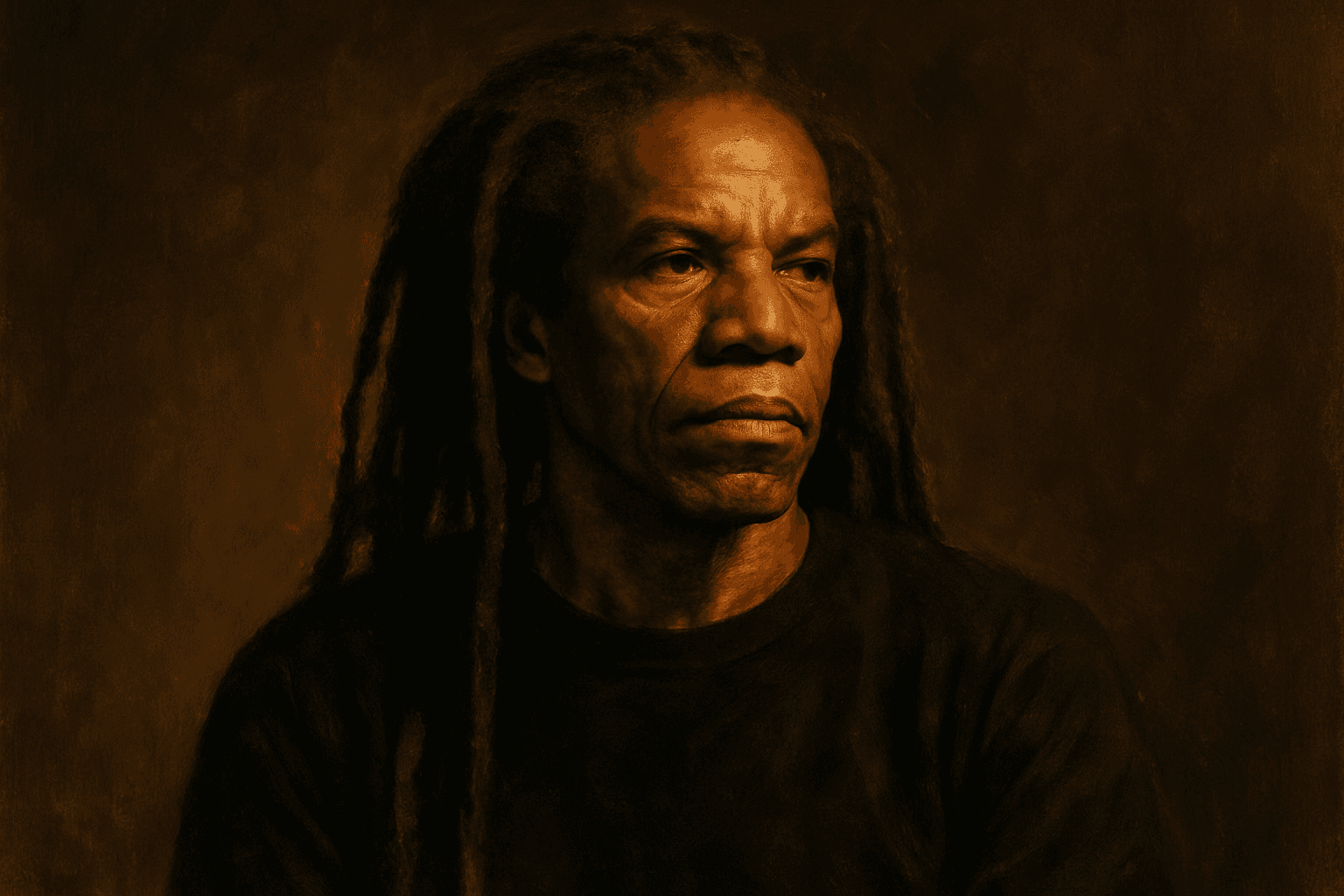
Eddy Grant Walked Away From the Charts to Find Himself
The man who gave us 'Electric Avenue' turned his back on London's music machine in 1982. He built a studio in Barbados and never looked back.
Eddy Grant was twenty-nine when he walked away.
Not from music — from the industry that had made him. From London. From the polite machinery of record labels and radio playlists and the expectation that a Black British musician should stay grateful and visible and available.
He had already done the work. The Equals, the band he fronted in the late sixties, gave Britain 'Baby Come Back' — a number one in 1968, back when a multiracial rock band was still a novelty the press didn't know how to handle. Grant wrote it, sang it, played it. The song charted in fifteen countries. He was twenty-one.
But by 1971, Grant was done with the Equals. He wanted to produce, to write for other people, to control the sound. He spent the seventies in a North London studio, working with anyone who would let him — reggae acts, soul singers, pop hopefuls. He learned the board, learned the business, kept his head down.
Then in 1982, he left.
Not for New York or Los Angeles, the usual escape routes. He went to Barbados. Bought land in St. Philip, the quiet eastern parish where the Atlantic breaks hard and the tourists don't go. Built a studio there — Blue Wave Studios — and wired it himself. Ran cables through the walls, installed the mixing desk, painted the control room. He wanted a place where he could make records on his own terms, without London's weather or London's expectations.
The first album he made there was Killer on the Rampage. Released in 1982. It had 'Electric Avenue' on it.
The song is about the 1981 Brixton riots. Electric Avenue is a real street in Brixton, South London — the first market street in Britain to be lit by electricity, back in the 1880s. By 1981, it was the centre of a community the police treated like enemy territory. The riots that April were not spontaneous. They were the inevitable result of years of sus laws, stop-and-search, unemployment, and a government that had written off Black Britain.
Grant was in Barbados when the riots happened, but he knew Brixton. He had lived it. 'Electric Avenue' is not a protest song in the way people think. It is a document. The synth line is tight, almost martial. The chorus is a warning, not a celebration. "We gonna rock down to Electric Avenue / And then we'll take it higher." Higher meaning what? Out of the violence, or into it? Grant never clarified. He didn't need to.
The song went to number two in the UK, number two in the US. It made him famous in a way the Equals never had. But Grant did not move back to London. He stayed in Barbados. Kept making records at Blue Wave. Brought other artists in — Mick Jagger recorded there, so did the Rolling Stones, so did Sting. But Grant was not interested in becoming a celebrity producer. He wanted autonomy, not access.
He released more albums through the eighties — Going for Broke, Born Tuff. The hits kept coming. 'I Don't Wanna Dance' went to number one in six countries. 'Gimme Hope Jo'anna' became an anti-apartheid anthem, banned in South Africa, played everywhere else. Grant wrote it in twenty minutes. The title is a play on Johannesburg. The song is not subtle. It did not need to be.
But the thing about Eddy Grant is that he never chased the next big thing. He had already figured out what mattered. Control. Ownership. The ability to make music without asking permission.
He still lives in Barbados. Still owns Blue Wave. Still releases records on his own label, Ice Records, which he founded in 1975. He is seventy-six now. He has not had a hit in decades. He does not seem to care.
In interviews, he is polite but uninterested in nostalgia. He does not do reunion tours. He does not repackage the Equals for a new generation. He talks about the future of Caribbean music, about digital distribution, about young producers who need studios. He is still working.
Eddy Grant walked away from the charts in 1982. He found what he was looking for. He built it himself.
Get the next drop in your inbox.
Three drops a week. Wednesdays, Saturdays, Sundays. Edited by Denise.
One email per drop. Unsubscribe any time. We never share your address.